
Global Treatment Services Pvt. Ltd.

Global Treatment Services

Cesarean Section

When it comes to delivery,cesarean section is often frowned upon.People shaming c-section says it is not ‘real birth’.They argue that it is an easy way out and you did not experience pain and the baby did not come out of you and on and on.Alas,vaginal birth is not the only thing a mother does for her baby.If  C-section babies are not really born,they would still be in their ‘trimesters’!!Let us see the details of c-section mode of delivery here to accept and appreciate it.16.feb25Csection
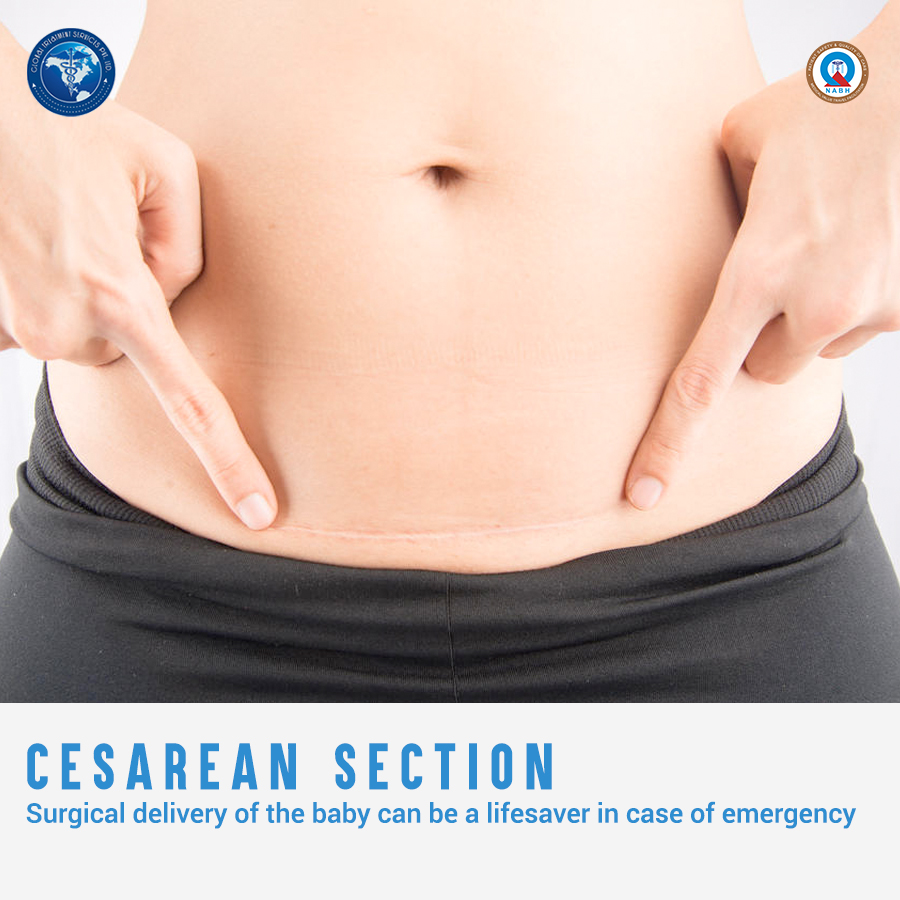
What is c-section

Cesarean section delivery is the surgical delivery of the baby by making incisions in the abdomen and uterus of the mother.Emergency c-section is performed when the labour has already begun but complications crop up.Health care team decides immediately that it is the safest option.Emergency c-section can be life saving for both mother and the baby.
When the mode of delivery is already chosen to be c-section before one goes into labour,then it is called planned or elective c-section.In most cases, c-sections are done for the safety of the child.Vaginal delivery poses danger when baby is lying in difficult position for labour or there are problems with the placenta such as a low lying placenta.

Reasons for planned Cesarean Section 

There are several reasons why cesarean sections may be planned prior to the labour or at the beginning of labour. As mentioned earlier,most of the reasons attribute to the safety of the baby and/or the mother.

Placenta Previa
This is where the placenta is near of covering the cervix. This blocks the pathway for a vaginal birth or would present a bleeding risk during labor.

Certain Fetal Positions
Your baby’s position in the uterus may mean that a vaginal birth is not possible, nor safe for them to be born. This can include: Transverse Lie, some breech positions, etc.

Higher Order Multiples
With every baby that you have in the uterus the risk of a cesarean birth increases. While there are births of twins and triplets vaginally, the more babies, the less likely a vaginal birth will be possible. This is many times due to odd positions in the uterus.

Genital herpes
If you have herpes occurring late in pregnancy and you have an active lesion on your genitals, you may be encouraged to have a cesarean rather than delivery vaginally. This is to prevent transmission to your baby.

Pre-eclampsia
You have pregnancy-related high blood pressure

Certain Fetal Conditions
Your baby isn’t getting enough oxygen and nutrients – sometimes this may mean the baby needs to be delivered immediately

Other conditions
Your labour isn’t progressing or there’s excessive vaginal bleeding,diseases that may make vaginal birth difficult like pulmonary or coronary disease of the mother,HIV positive with a high viral load at time of birth.Previous invasive uterine surgery, including a previous classical cesarean incision

Some mothers may choose planned c-section if they feel they cant cope with the pain involved in a vaginal birth especially if they had had a difficult vaginal delivery with their last baby.Also for some mothers,it may have caused severe postpartum depression.You never know what she goes through physically and emotionally.So ,there is no reason in shaming mothers going ahead with elective c-section.

C section Sugery

Most caesareans are carried out under spinal or epidural anaesthetic. Both types of anaesthetic are given as an injection in your spine that numbs the lower part of your body. This mean you’ll be awake.You will either lie on your side or sit leaning forward, curving your back, while the anaesthetist inserts a very fine needle into your spine.Occasionally a general anaesthetic, where you’re asleep, may be used, particularly if the baby needs to be delivered more quickly.This means you will be asleep for the operation

Before the procedure:You will be given

  • fluids through a needle in your arm (a drip), to stop you getting dehydrated and to reduce the risk of low blood pressure during the operation
  • anti-sickness medicine to stop you feeling or being sick
  • a small tube (catheter) into your bladder to drain urine – this will stay in place for at least 12 hours and until you feel able to walk to the toilet.

During the procedure:

  • a screen is placed across your body so that what’s being done is not seen.
  • a cut about 10-20cm long will usually be made across your lower tummy and womb so your baby can be delivered.you may feel some tugging and pulling during the procedure
  •  Baby is then lifted out.

The whole operation normally takes about 40-50 minutes.

After the procedure:

  • regular checks to make sure the anaesthetic is wearing off , your breathing, heart rate, blood pressure, wound dressing and pain relief for the first few hours
  • regular checks on the amount of vaginal bleeding
  • a catheter to drain urine from your bladder
  • compression stockings to reduce your risk of blood clots
  • a needle in your arm (drip) to give you fluids until you’re eating and drinking again

Recovery

C section is a major surgery meaning it risks associated with it like any other surgery.Moms are at greater risk during c section than vaginal birth.Recovery takes more time than normal delivery. Most women experience some discomfort for the first few days after a caesarean, and for some women the pain can last several weeks.The wound in your tummy will eventually form a scar.Regular pain killers are advised to control pain and bleeding.Once the anaesthetic has worn off, you’ll be able to stand up and do short walks.It’s important to move around soon after your c-section to reduce the risk of blood clot.

Benefits far outweigh any disadvanatges.No reasons for shaming mothers!

For any queries regarding  treatment facilities,email us at query@gtsmeditour.com 
Read about:Autism


Endometriosis

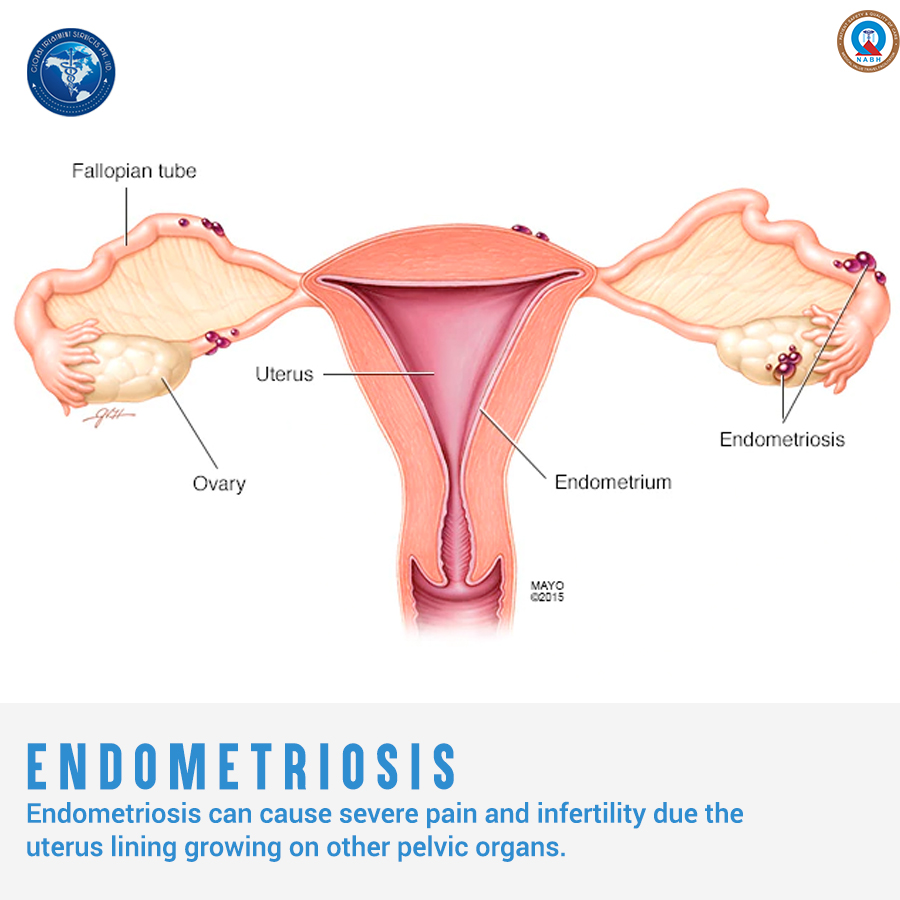
Endometriosis a painful condition caused when tissues that line the uterus grow outside of uterus.The tissues that make up the lining of the uterus is called endometrium.Women with endometriosis have tissues similar to endometrium  on other organs of the body. Endometriosis usually occurs usually on other reproductive organs inside the pelvis or in the abdominal cavity and affects women of childbearing age.9 .Feb13Endometriosis


Understanding the condition

In a regular menstrual cycle,if fertilization has not happened , hormonal changes signal the uterus to prepare to shed its lining.The endometrial tissues build up and egg along with the uterine lining is shed in form menstrual bleeding.Whereas in patients with endometriosis,the misplaced endometrial tissues  also respond to the hormonal signals and by building up and breaking down just like the endometrium does, resulting in small bleeding inside of the pelvis.Unlike the cells in the uterus that leave the body , this blood has no way to escape.This leads to inflammation, swelling and scarring of the normal tissue surrounding the endometriosis implants.
Mostly,the endometrial tissues grow on ovaries, Fallopian tubes, bowel and outer walls of the uterus.But it can appear anywhere in the body.Though very rarely,it is found to develop on kidney, bladder and lungs. Endometriosis can be located on and even within an ovary, causing fibrous cysts called endometriomas. Blood become embedded in the normal ovarian tissue  surrounded by endometrioma.

Causes

Several ideas have been proposed to explain what causes the tissues on uterine lining to grow on other parts of the body.One idea explains endometriosis by retrograde menstruation.It is a sort of reverse menstruation in which the period blood and tissues travel out of the uterus  through Fallopian tubes to the abdominal cavity where it attaches and grows.But this idea fail to explain the occurrence of endometriosis at strange locations like thumb and knee.It is better explained by another theory that suggests that some cells outside uterus can transform into endometrial cells.  Another possible explanation is that the cells from the lining of the uterus travel  and implant via blood vessels or lymphatic system to reach other organs similar to how cancer cells spread. Also, endometriosis can spread as a result of direct transplantation during a cesarean section where in endometriosis cells attach to the abdominal incision and endometriosis is formed in the scar.

Symptoms

Symptoms of endometriosis vary in different women. Some women experience mild symptoms, but others can have moderate to severe symptoms. The severity of your pain is not the indicator of stage of the condition. Mild form of the disease may cause agonizing pain. It’s also possible to have a severe form but very little discomfort.For some,it is asymptomatic.

Pelvic pain is the most common symptom of endometriosis. You may also have the following symptoms:

  • painful periods especially excessive menstrual cramps or irregular periods
  • pelvic pain before and during menstruation
  • infertility
  • heavy menstrual bleeding or spotting between periods
  • Painful urination or  blood in the pee during menstrual period
  • uncomfortable bowel movements
  • pain after sexual intercourse
  • lower back pain that may occur at any time during your menstrual cycle
  • feeling sick, constipation, diarrhoea
  • Nausea and fatigue

Endometriosis and Pain,infertility

Due to the misplaced cells,the woman with endometriosis have bleeding from tissues outside the uterus as well during menstrual period.When blood comes into contact with other organs especially in the abdomen, it causes inflammation and irritation, creating pain. Also,the scar tissue developed from the endometriosis contribute to the pain.
Endometriosis seems to impair fertility  by causing distortion of the fallopian tubes making it incapable of picking up the egg after ovulation and by creating inflammation that can adversely affect the function of the ovary, egg, fallopian tubes or uterus.
Statistics show that  20 – 40% of women with infertility have endometriosis and this points to how much of a factor endometriosis is in infertility!

Diagnosis

Since endometriosis manifests itself in many ways and shares symptoms with other conditions, diagnosis can be difficult and often delayed. The condition is in most case diagnosed ,when the patient tries to evaluate infertility and  pelvic pain in one another reason.The only definitive way to diagnose endometriosis is by laparoscopy.Laparoscopy is a minor surgical procedure in which a laparoscope, a thin tube with a camera at the end, is inserted into the abdomen through a small incision. Laparoscopy helps to determine the location, extent and size of the endometrial growths.

Treatment

Treatment options available to women with endometriosis are:

  • Surgery
    As a treatment for endometriosis, surgery can be used to alleviate pain by removing the endometriosis, dividing adhesions or removing cysts.
    Conservative surgery: This aims to remove or destroy the deposits of endometriosis and is usually done via a laparoscopy (keyhole surgery). This is also used to diagnose the disease and can be used to improve fertility.  Although surgery can provide relief from symptoms, they can recur in time.
    Radical surgery: This refers to a hysterectomy or oophorectomy: Hysterectomy is the removal of the womb,  with or without removing the ovaries. If the ovaries are left in place then the chance of endometriosis returning is increased. Oopherectomy is the removal of the ovaries, either one or both.When both ovaries are removed, a woman will experience an instant and irreversible menopause.
    These procedures may be decided after taking many factors into consideration.
  • Hormone treatment
    These are treatments that are used to act on the endometriosis and stop its growth. They either put the woman into a pseudo-pregnancy or pseudo-menopause because during pregnancy the endometrium is thin and also inactive. Both states are reversed when the patient stops taking the hormones. In addition, testosterone derivatives are occasionally used to mimic the male hormonal state.All of these have a contraceptive effect, so are not used if the patient is trying to become pregnant.
  • Pain relief
    Pain medication avoids the use of hormones so it does not prevent the growth of endometriosis.When taken appropriately, pain medication can be extremely effective. Either painkillers, or drugs that modify the way the body handles pain, can be used.

Some complementary therapies may be beneficial in controlling the symptoms of endometriosis.These include acupuncture,homeopathy,yoga etc.

The course of treatment depends on several factors.The approach will depend on how severe the disease is and when you expect to become pregnant.Endometriosis is a debilitating and challenging condition. Fortunately, there are treatments available which can alleviate the symptoms and condition.

 For any queries regarding the procedure and treatment facilities,email us at query@gtsmeditour.com .

Read about:Crohn’s disease


Pages:12